What jet lag does to your body - and how to cope

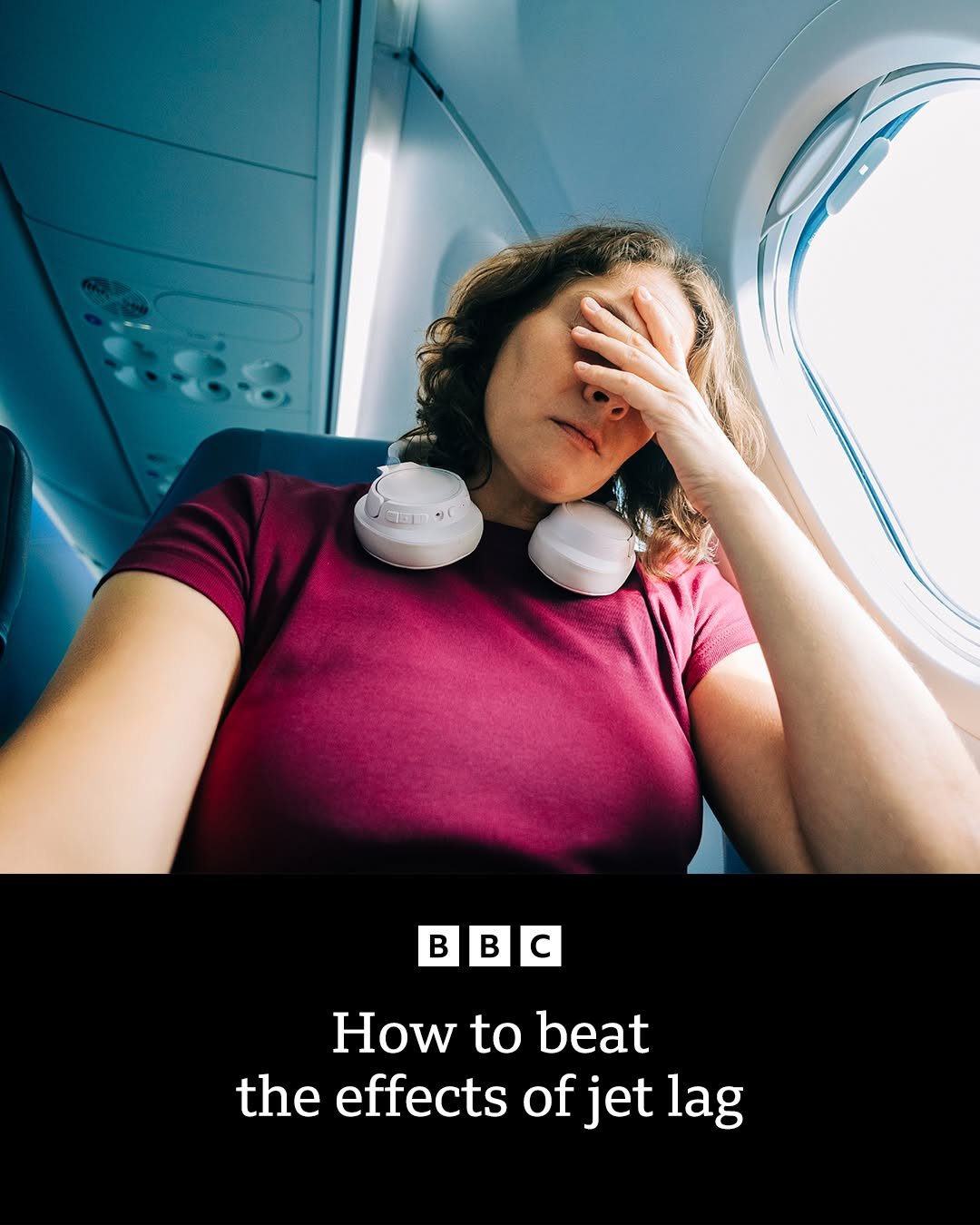
The chief culprit is not a lack of sleep, but disruption to the body's biological clock. This clock runs on a cycle of roughly 24 hours, urging us to eat, sleep and be active at the right times.
But every day the body clock needs resetting slightly because it is set to run at just over 24 hours. So, to keep us in sync, photosensitive retinal ganglion cells in the eye detect that it's getting dark. Then they send a cascade of messages, which results in the pineal gland – an organ the shape of a pine cone, which sits at the back of the brain – secreting the sleep hormone melatonin.
This system is run by a region of the brain called the supra-chiasmatic nuclei or SCN. Russell Foster, a professor of Circadian Neuroscience at the University of Oxford and the author of the book Life Time, explains that the SCN is like the conductor of an orchestra. It allows us to live our lives in neat cycles of night and day, he says.
Or at least, that's what the SCN does until we take a long-haul flight. Then it's as though the orchestra has lost its conductor and things go awry.
Some of us are affected more than others, depending on factors such as our genetic make-up and regular medications. Symptoms tend to be worse the more time zones we cross, when the days are short and when flying east. The symptoms of jetlag are unpleasant, but for most of us they are short-term and occasional. However, there is a group of people for whom jet lag is unavoidable –airline crews. The precise pattern of an individual pilot or air steward's schedule can make a significant difference to their body's ability to recover.
