Cats, condoms and licence plates: The sharks that will eat anything

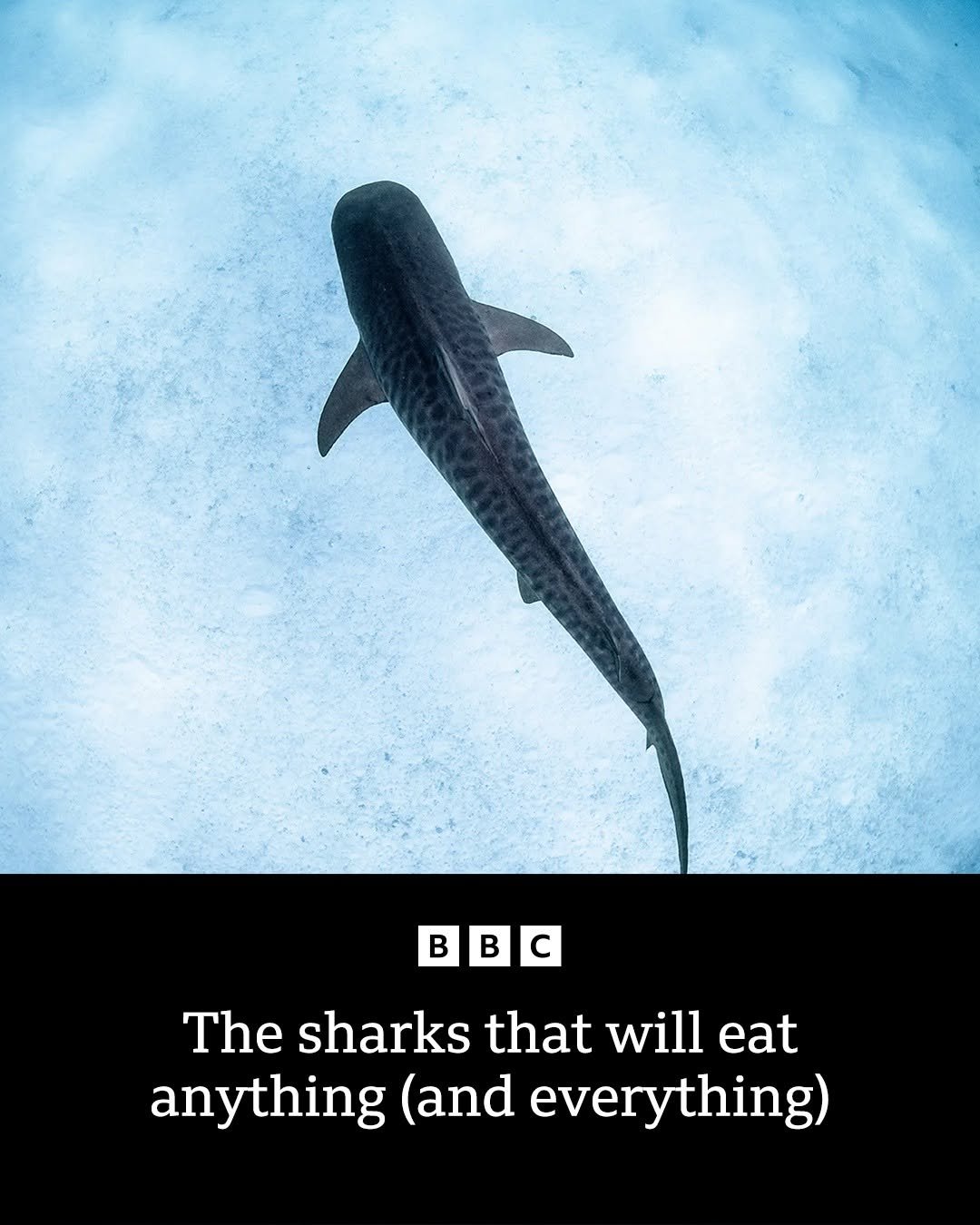
As are humans. Together with great whites and bull sharks, tiger sharks are known as one of the world's "Big Three" most dangerous shark species – although you are much more likely to be carried away by a rip tide or struck by lightning.
They will even swim into the eye of a hurricane if it means they'll get a good meal. But their stomachs of steel have an upside for others too.
By scavenging, tiger sharks clear away dead and dying creatures in the food chain. In doing so, they help maintain the health of the seas.
When a storm is approaching, many "sharks detect the change in barometric pressure and move to deeper, less affected waters", says Phil Doherty, a lecturer in marine conservation science at Exeter University.
Tiger sharks, though, seem to turn up in anticipation of a feast – and stick around to "scavenge on animals that have died".
 Dani Escayola/ Ocean Image Bank
This was something Hammerschlag was able to track in detail when, on 6 October 2016, Hurricane Matthew swept through The Bahamas.
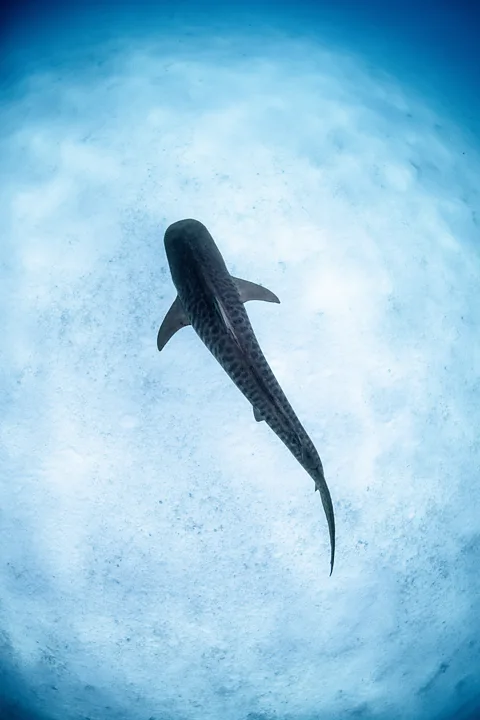
Tiger Beach – a large sandbank off the coast of Grand Bahama – is a popular dive spot, famous for its tiger sharks. Sandy flats are dotted with patches of seagrass and coral, and the clear, warm water is full of tiger sharks that are "longer than the water is deep", Hammerschlag says.
When the hurricane struck, the tiger sharks remained in shallow inshore waters – even as the site received a direct hit from the category-5 hurricane. And, by the time the storm had passed, the number of tiger sharks in the area had doubled.
